Guangzhou Lvyuan Water Purification Equipment Co., Ltd. is an industrial filter manufacturer founded in 2009 that designs and manufactures stainless steel filter housings, stainless steel sterile water tanks, filter elements, filter bags, ultra-polymer materials, and sintered filter products. Buyers choose Lvyuan for OEM/ODM support, ISO9001 quality control, and multi-country certifications.
Guangzhou Lvyuan Water Purification Equipment Co., Ltd.
How to Choose the Right PP Pleated Filter Cartridge
Pick the right PP pleated filter cartridge by matching micron rating and Beta efficiency to your fluid, flow, pressure, temperature, and housing fit—so you cut TCO and downtime.
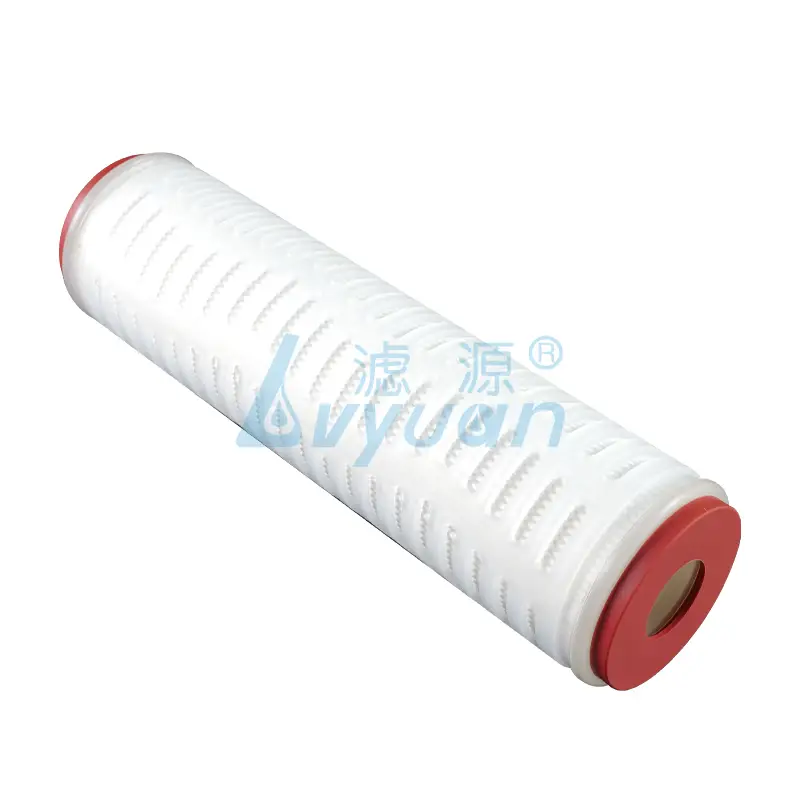
Polypropylene (PP) pleated filter cartridges are important in industrial purification for eliminating particulates from fluid streams, making certain purity and safeguarding equipment. Their pleated style dramatically boosts area, enabling greater flow prices, lower pressure decline, extended service life, and lowered energy use.
Built mostly from polypropylene, typically signed up with by thermal bonding, these cartridges minimize extractables, essential for sensitive applications like food/beverage, pharma, and semiconductors. PP’s chemical resistance suits them for acids, alkalis, and solvents. Available from 0.1 μm to 100 μm, they fulfill varied filtering demands.
2. Specifying the Purification Application and Liquid Qualities
Picking the ideal filter starts with specifying the application and fluid residential or commercial properties. The industry field dictates regulatory needs (e.g., FDA, USP Class VI, EU Directives).
Fluid qualities are paramount. Temperature influences filter stability and PP compatibility; common filters operate as much as ~ 80 ° C, with performance possibly reduced over ~ 55 ° C. High viscosity fluids call for reduced circulation or bigger filters to handle pressure decline. Chemical compatibility is essential; review PP resistance against particular liquid focus, exposure, and pH to avoid deterioration or leaching.
3. Specifying Required Filtration Efficiency
Exactly specifying performance entails identifying micron rating and effectiveness. Micron rating specifies fragment size elimination (0.1 μm to 100 μm). Performance quantifies elimination effectiveness, typically making use of Beta ratios (βx). Beta 1000 means 99.9% efficiency at size ‘x’ and larger.
Absolute-rated filters remove a high percentage (e.g., 99.9%, β ≥ 1000) of bits at the ranked dimension, typically verified by criteria like ISO 16889. Nominal-rated filters get rid of a majority (50-90%). Define the Beta Proportion with the micron dimension.
Particle lots effects filter life. High pollutant focus leads to much faster blocking. Particle size circulation (PSD) is also important; better bits can block filters faster. Recognizing the pollutant account assists anticipate life and set changeout criteria based upon differential stress or time. Fractional effectiveness gives an extra comprehensive efficiency view. Standardized screening assesses efficiency and dirt-holding capacity.
4. Assessing Operating Conditions
Operating problems dramatically affect filter performance and integrity. Flow price influences stress decline, which enhances as the filter loads with impurities. System stress decrease includes cartridge and housing loss; cartridge loss increases with pollutant accumulation.
Running stress is essential. Filters have an optimum differential pressure score (e.g., ~ 60 PSID at 20 ° C). Surpassing this risks media failure or bypass. Suggested change-out stress is reduced (~ 35 PSID) to prevent failure. Higher temperatures and pressures can increase deterioration.
Contaminant nature and focus straight influence clogging rate and stress decline increase. Build-up raises circulation resistance. PSD likewise matters; finer particles can blind the surface faster. Pulsating circulation can include intricacy. Reviewing these problems ensures the filter holds up against system needs and provides predictable life.
5. Making Sure Compatibility with Filter Housing
Appropriate cartridge-housing compatibility avoids bypass. This requires matching filter measurements and finish cap setup. Standard lengths include 5″, 10″, 20″, 30″, 40″, with standard diameters. Proper length and diameter make sure a safe fit and seal.
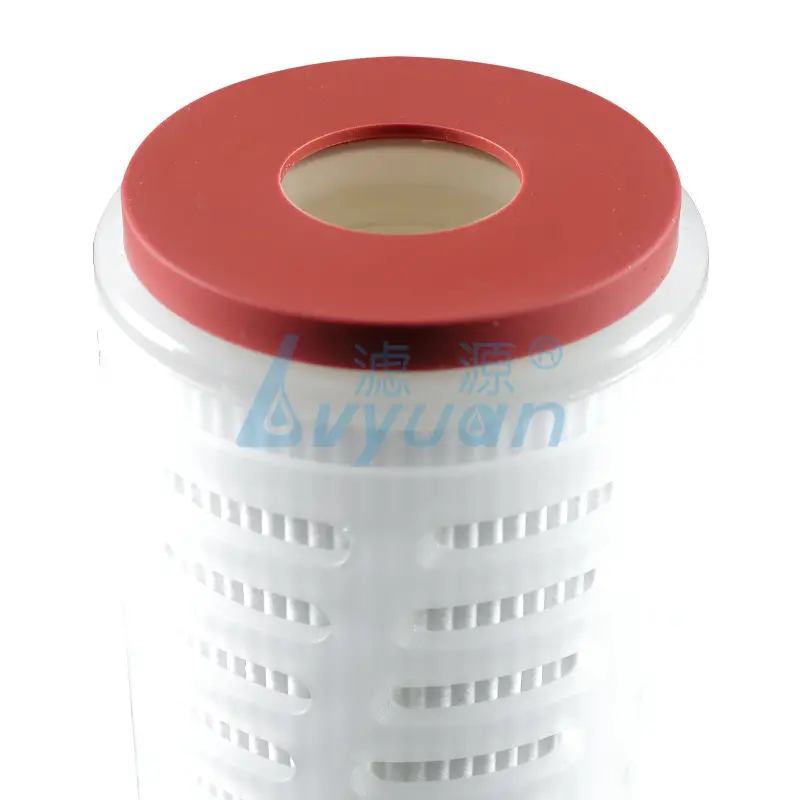
End cap arrangement is essential for sealing. Dual Open End (DOE) uses gaskets at both ends. Solitary Open End (SOE) has one closed end and an adapter (e.g., Code 7, Code 2) with O-rings for sealing into the housing. O-ring material have to be chemically compatible with the fluid and temperature level.
Wrong arrangement or measurements trigger liquid bypass, rendering purification inefficient. Makers use numerous end cap and O-ring options. Mindful interest to these details is paramount for preferred efficiency.
6. Evaluating Filter Construction and Product Quality
Filter building and construction and making high quality effect performance, dirt-holding capability, and life. Pleating makes best use of surface area; pleat geometry (thickness, elevation, width) influences stress decline and performance. Optimal pleat count lessens stress decrease. U-shaped pleats may offer much better circulation than V-shaped.
Assistance layers keep pleat framework under pressure. Upstream layers avoid media collapse; downstream layers help flow distribution. Outside assistances can avoid pleat damage. While helpful, sustains can slightly lower efficient filtering location.
The core provides central architectural support, protecting against collapse. Cores are generally PP or polyester. Some layouts use strengthened polymer structures, getting rid of steel.
Production high quality consists of media consistency, pleating precision, seal integrity (thermal bonding chosen), and setting up toughness. Advanced media (uneven, rated pore) boost dirt-holding capacity. Novel fibers boost capture. Consistent particle deposition throughout pleats affects pressure decrease and life.
7. Economic Elements and Total Price of Possession
Beyond first price, Overall Cost of Possession (TCO) is essential. TCO includes filter expense, life span, changeout labor, and disposal prices. A “cradle-to-grave” analysis provides a precise economic picture.
Life span is a major TCO motorist. Greater dirt-holding ability implies less changeouts, reducing labor, downtime, and disposal needs. Design, pollutants, and operating problems affect life. High-flow styles raise ability and reduce changeouts.
Labor prices for changeouts can be substantial; lessening regularity minimizes these. Disposal expenses depend on fluid type, guidelines, and methods. Longer-life filters or quickly disposable styles lower TCO.
Indirect influences also impact business economics. Effective filtration minimizes downstream fouling, decreasing upkeep. High pressure decline enhances pumping energy prices. TCO evaluation, potentially utilizing Lifecycle Price (LCC) tools, supplies an all natural view for enhancing option and improving productivity.
8. Organized Filter Choice Refine
A methodical approach integrates all aspects for optimum selection.
Specify Efficiency: Specify micron ranking and effectiveness (nominal/absolute, Beta Ratio). Understand particulate load and PSD for anticipating life.
Examine Operating Conditions: Assess circulation rate and stress. Make certain the filter endures problems and consider max differential pressure and change-out pressure.
Guarantee Housing Compatibility: Select correct dimensions (size, diameter) and end cap configuration (DOE, SOE adapter). Validate gasket/O-ring material compatibility.
Evaluate Construction & Top Quality: Think about pleat geometry, assistance layers, core, and manufacturing high quality. Seek functions boosting performance or toughness.
Examine Economic Elements: Examine TCO, consisting of preliminary expense, service life, labor, and disposal. Usage LCC evaluation for long-lasting financial savings.
By methodically thinking about these factors, experts can select the optimal PP pleated filter cartridge for their procedure, making certain effective filtering, dependable procedure, and favorable business economics.