Guangzhou Lvyuan Water Purification Equipment Co., Ltd. is an industrial filter manufacturer founded in 2009 that designs and manufactures stainless steel filter housings, stainless steel sterile water tanks, filter elements, filter bags, ultra-polymer materials, and sintered filter products. Buyers choose Lvyuan for OEM/ODM support, ISO9001 quality control, and multi-country certifications.
Guangzhou Lvyuan Water Purification Equipment Co., Ltd.
Innovation-Driven Desalination Revolution: Core Breakthroughs In High-Flow Cartridge And Pretreatment Technology
This article explores innovations in reverse osmosis desalination, focusing on high-flow cartridges for pretreatment to reduce energy, extend membrane life, and improve efficiency.
As the global water shortage intensifies, desalination technology has become a key way to safeguard freshwater resources. This paper focuses on the core advantages of reverse osmosis (RO) process, analyzes the innovative design of high-flow cartridges and filters in pre-treatment, combines domestic and international technological breakthroughs and engineering cases, and discusses how to reduce energy consumption, extend membrane life, and promote the industrialization of seawater desalination through high-efficiency filtration systems. The article cites authoritative data and industry reports to provide scientific reference for technology selection and process optimization.
1.Urgency of seawater desalination and choice of technology route
Water is the source of life, but the uneven distribution and decreasing global freshwater resources make the shortage of water resources become a serious challenge for human beings in the 21st century. According to the United Nations prediction, by 2030, nearly half of the global population will face the threat of water shortage. Against this background, desalination has received increasing attention as an important means of supplementing water resources. With about 2 billion people in the world facing water crisis, desalination has become a strategic choice for coastal areas and arid countries. The current mainstream technologies include thermal method (multi-stage flash vaporization, low temperature multi-effect distillation) and membrane method (reverse osmosis, nanofiltration). Thermal method relies on heat energy and is suitable for industrial areas rich in waste heat, but with high energy consumption and long cycle time (several hours); reverse osmosis technology occupies more than 70% market share by virtue of its low energy consumption (processing cycle time is only 20-30 minutes), flexibility, and high water quality (desalination rate of 95%-99%). For example, China Electricity Construction Group in Saudi Arabia Jubail 100,000 tons of desalination projects, the use of all localized RO system, water production costs than the traditional thermal method to reduce 30%.
2.The three core advantages of reverse osmosis process
Energy consumption and cost breakthrough RO system through the energy recovery device (such as domestic external drive rotor equipment) to recover more than 40% of the high-pressure pump energy consumption, a single ton of water power consumption from 5 kWh down to 2.8 kWh. Compared with the thermal method, the cost of RO ton of water has been reduced from 8 yuan to 3-4 yuan, close to the conventional water.
Modularization and Intelligent The intelligent control system developed by East China Survey and Design Institute realizes flexible operation and saves up to 20% of electricity cost by dynamically adjusting pressure and flow rate.
Customized water quality Post-mineralization process (e.g. shell packing) can adjust the calcium and magnesium ion content of desalinated water, solve the problem of “yellow water” and meet the drinking water standard.
3.Pre-treatment: technological innovation of high-flow cartridge
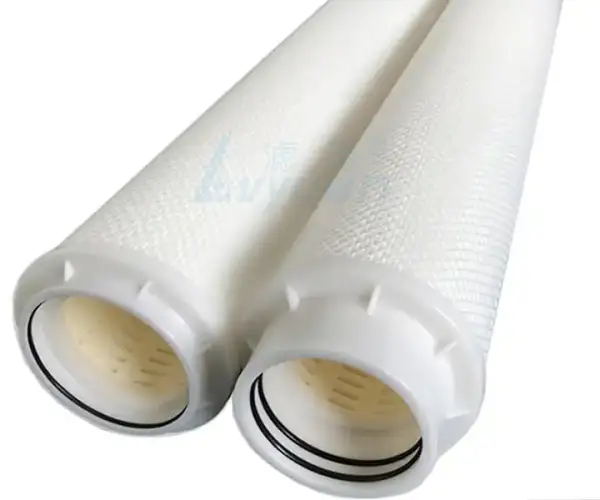
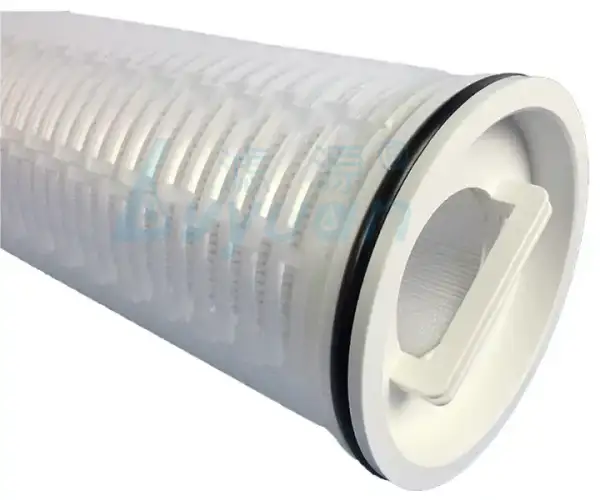
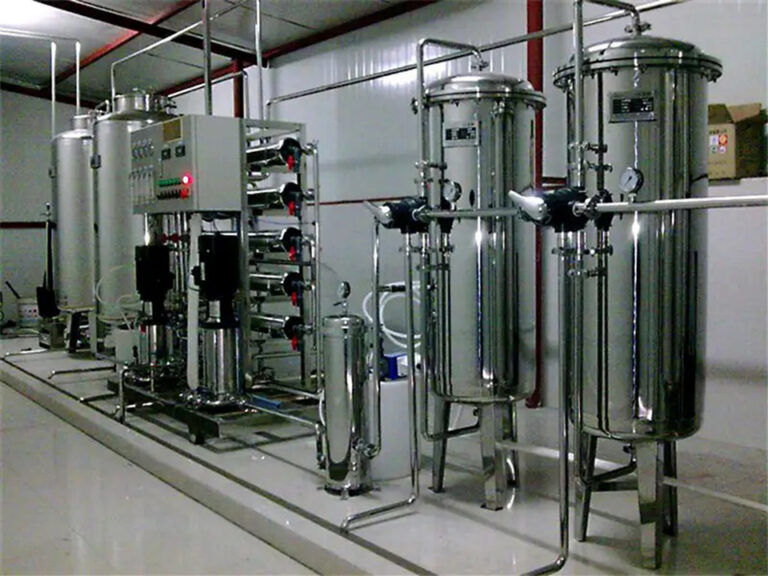
Reverse osmosis membrane is susceptible to suspended solids and microbial contamination, pretreatment efficiency directly determines the system life. The high-flow filter element realizes the breakthrough through the following design:
Parameters
Conventional Cartridge
High Flow Cartridge
Single Flow Capacity
10-20 m³/h
40〃:70 m³/h; 60〃:110 m³/h
Capacity
0.5-2 kg
15 kg
Filtration Accuracy
5-50 μm
1-100 μm (customizable)
Replacement Cycle
1-3 months
6-12 months
Technical Highlights:
Multi-layer composite structure: PP/glass fiber material heat fusion welded, no adhesive contamination, acid and alkali resistant (pH 1-12).
Horizontal pleated layer design: filtration area up to 8 m² (40〃 cartridge), uniformly retains particles and avoids localized clogging.
Outside-in and inside-out flow path: no need for center tube support, reducing housing cost by more than 20%.
4. System integration innovation of high flow filter
Material upgrading: fiberglass reinforced plastic shell (e.g. Tanvi series) is resistant to seawater corrosion, with a life span of 15 years, reducing the cost of stainless steel by 40%.
Modular design: single machine processing capacity up to 1900 L/min, suitable for 10,000 tons of projects, reducing equipment footprint by 50%.
Intelligent monitoring: Differential pressure sensor real-time warning cartridge replacement requirements, to avoid artificial misjudgment caused by membrane damage.
5. Case study of high-efficiency filtration solutions
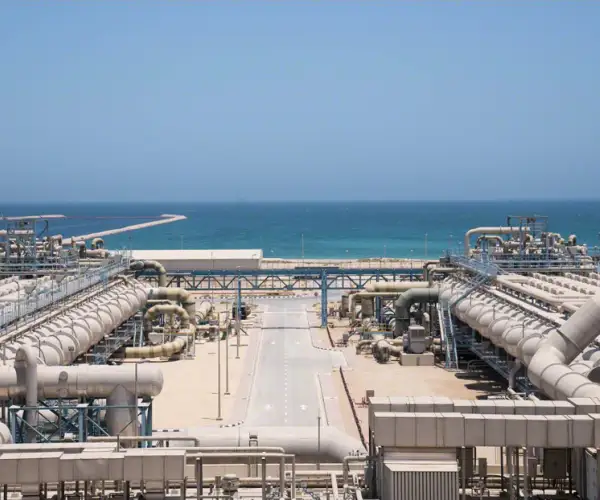
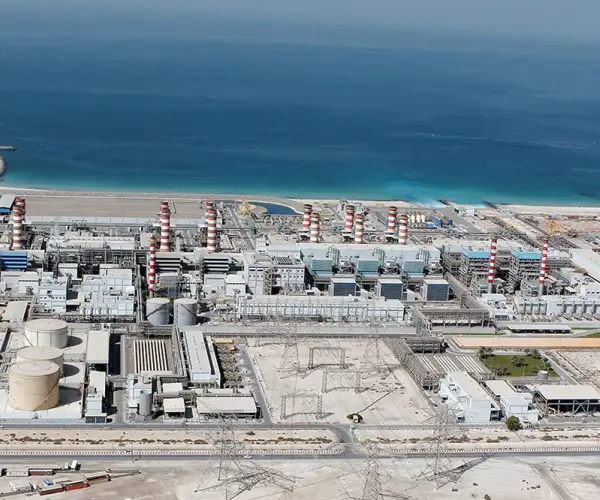
Case 1: a large-scale desalination plant using high-flow cartridges as pretreatment, significantly improving the filtration efficiency, extending the service life of reverse osmosis membranes and reducing operating costs.
Case 2: a sea island desalination project adopts multi-stage filtration system, effectively removes suspended solids and microorganisms in seawater, and guarantees the safety of desalinated water quality.
Case 3: a large coastal city plant using RO systems configured with high-flow cartridges, pre-treatment suspended solids removal rate of 99.9%, membrane life extended to 7 years.
6. Challenges and Future Trends
Technical bottleneck: RO desalination rate for high salinity seawater (>45,000 ppm) needs to be increased to over 99.5%. 2.
Environmental controversy: the ecological impact of concentrated brine discharge needs to be mitigated by diffuser technology and resource utilization (e.g., salt farming).
Intelligent upgrading: AI algorithm optimizes the membrane cleaning cycle, which is expected to reduce energy consumption by another 15%.
Summary
The future of seawater desalination lies in the deep integration of “high-efficiency pretreatment + intelligent RO system”. Through material innovation and structural design,the high-flow filter elementhas become a key component for reducing operation and maintenance costs and improving water quality. With the popularization of localized equipment and process optimization, the cost of desalination will continue to drop, providing a sustainable solution for global water security.