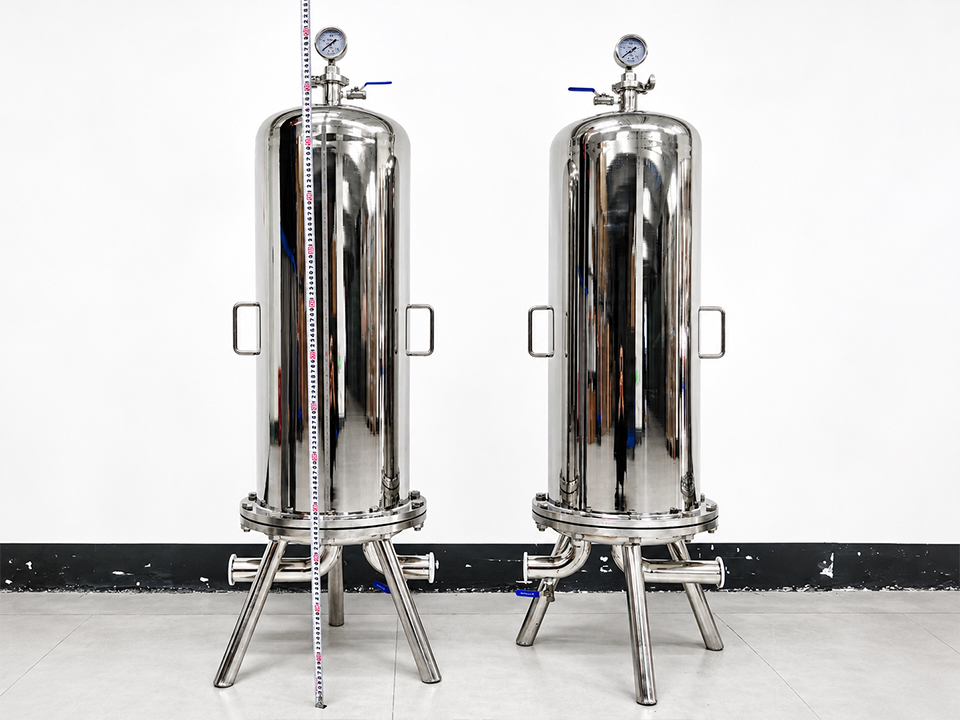
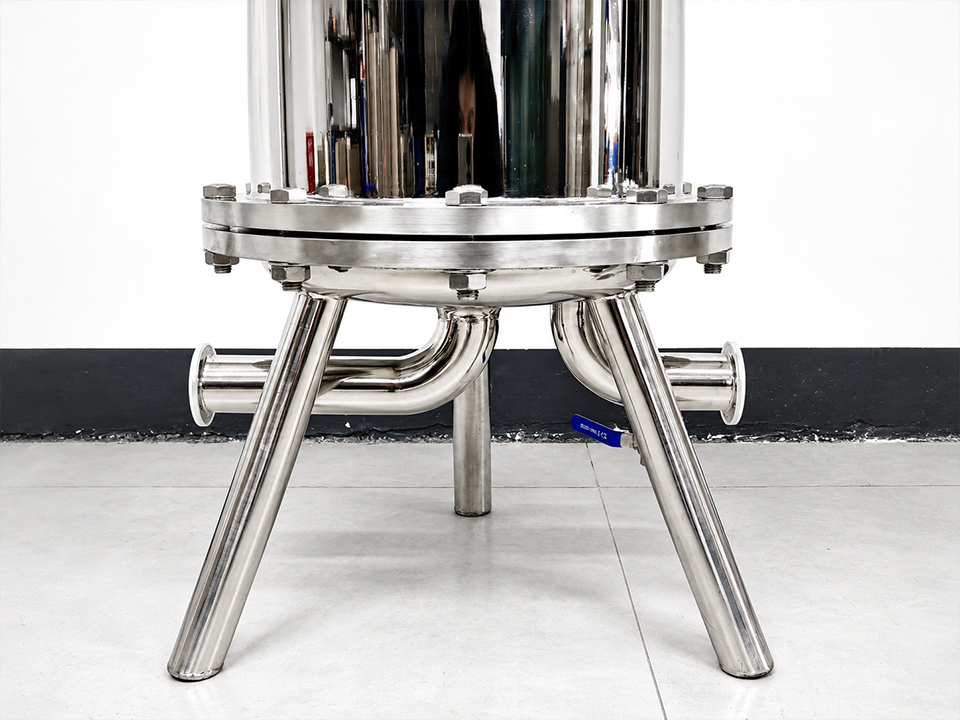
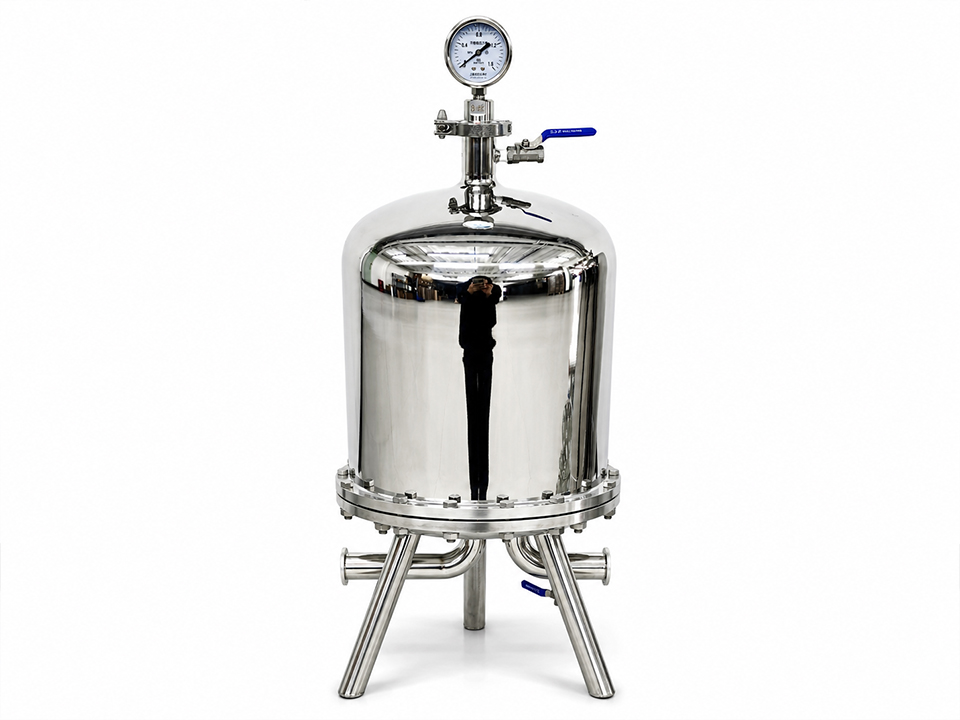
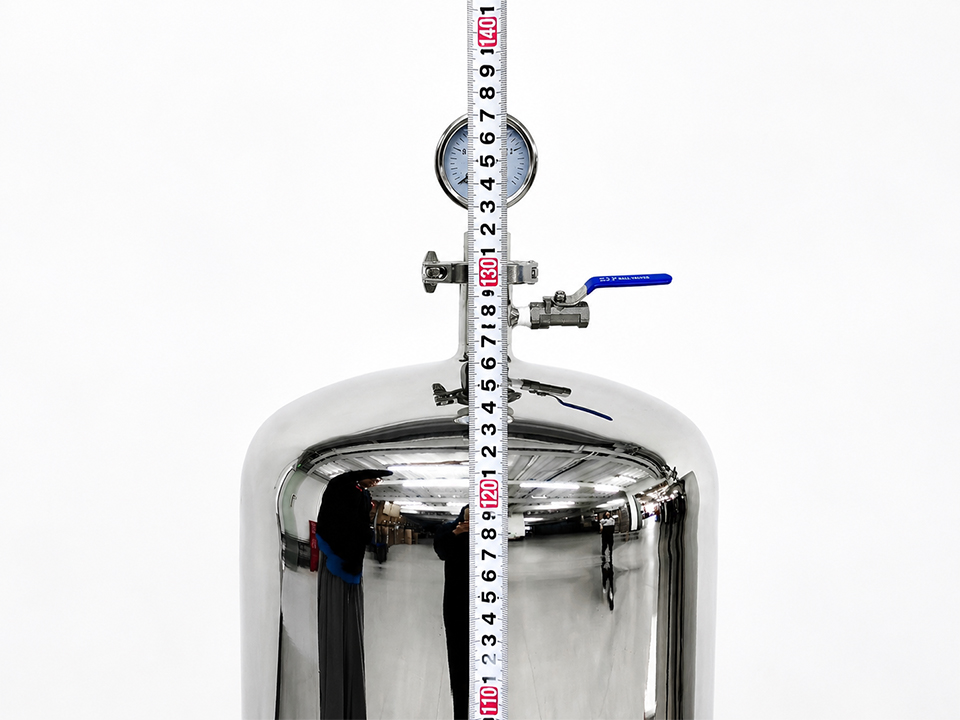
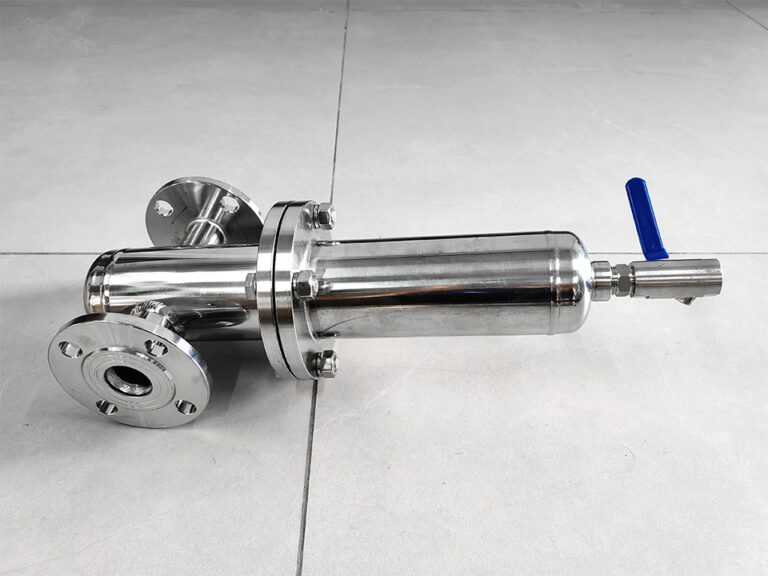
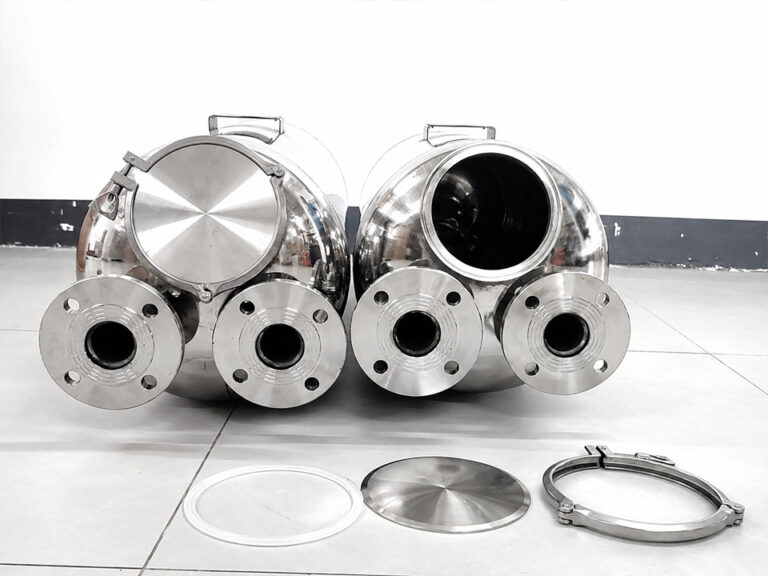
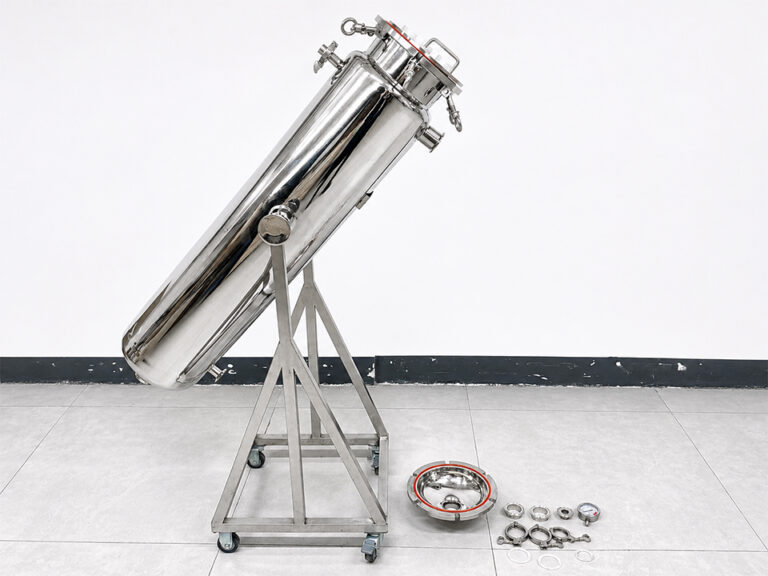
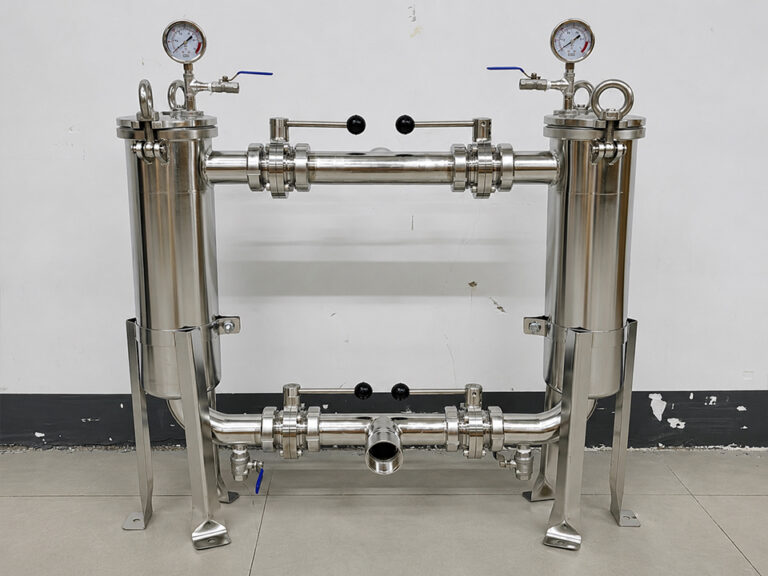
Guangzhou Lvyuan Su Arıtma Equipment Co, Ltd, 2009 yılında kurulan ve paslanmaz çelik filtre muhafazaları, paslanmaz çelik steril su tankları, filtre elemanları, filtre torbaları, ultra polimer malzemeler ve sinterlenmiş filtre ürünleri tasarlayan ve üreten endüstriyel bir filtre üreticisidir. Alıcılar OEM/ODM desteği, ISO9001 kalite kontrolü ve çok ülkeli sertifikalar için Lvyuan'ı seçmektedir.
304 ve 316L Filtre Muhafazaları: Malzeme Seçim Kılavuzu
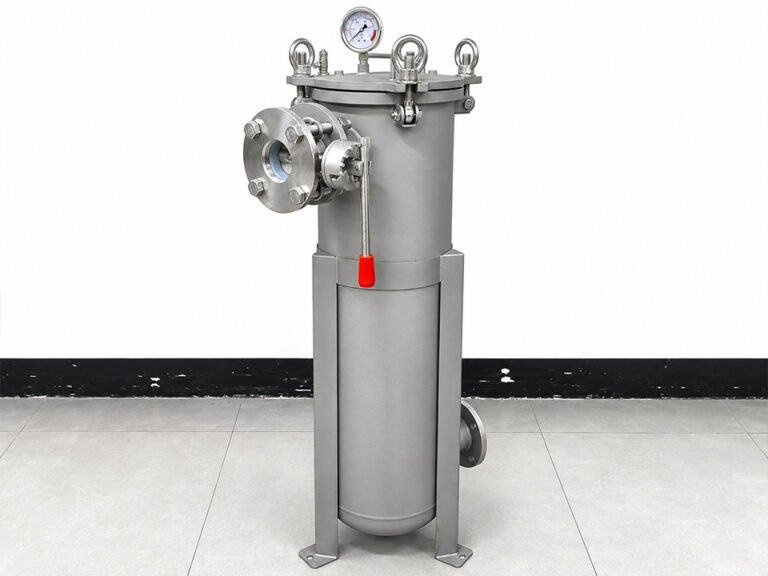
Choosing between 304 and 316L for a stainless steel filter housing looks like a simple grade upgrade decision, but it usually comes down to one question: what will sit against the inside wall of the vessel, and for how long? Both grades are austenitic stainless steels, and both perform well in clean, low-chloride water. They diverge when chlorides, chlorine-based sanitizers, heat, stagnant liquid or crevices around gaskets enter the picture. A housing that corrodes does more than shorten its own life. It can contaminate filtrate, damage cartridge seats and stop a line. This guide explains where 304 is sufficient, where 316L earns its premium, where neither grade is the right answer, and what to specify and verify before you place an order.
Short Answer: When Is 304 Enough and When Do You Need 316L?
Specify 304 when the fluid is low in chlorides, near neutral in pH, cleaned with mild chemistry and the housing drains and dries cleanly. Specify 316L when the process stream, cleaning regime or installation environment can concentrate chlorides, when sanitizer contact is frequent, when the housing sits at elevated temperature, or when a customer specification calls for molybdenum-bearing stainless steel.
The reason is chemistry. 316L contains molybdenum, which improves resistance to pitting and crevice corrosion, and its carbon cap reduces sensitization in welds. Neither grade is a universal answer: the water-industry guidance discussed below shows that 316 types also have a chloride ceiling.
What Actually Differs Between 304 and 316L?
Bu UK water industry’s guidance note on stainless steel (IGN 4-25-02, 2023 edition) lists EN 10088 composition limits that show the differences clearly. Grade 1.4301 (304) allows up to 0.07% carbon, 17.0–19.5% chromium and 8.0–10.5% nickel, with no molybdenum. Grade 1.4404 (316L) caps carbon at 0.03%, with 16.5–18.5% chromium, 10.0–13.0% nickel and 2.0–2.5% molybdenum. ASTM ranges differ slightly, so confirm which standard your purchase specification references.
Karar faktörü
304
316L
Tedarikçiyle neleri doğrulamak gerekir
Molybdenum
None specified
About 2–2.5% (EN 10088)
Mill test report showing actual Mo content, not just the grade name
Carbon limit
Higher (0.07% in EN 10088)
0.03% maximum
Whether welded parts use true low-carbon material
Pitting and crevice resistance
Adequate in low-chloride, well-drained service
Higher, but not unlimited
Chloride, chlorine, temperature and pH at the worst point in the cycle
Customer, industry or regulatory material requirement
Unit price
Daha düşük
Higher; gap moves with alloy surcharges
Quote both grades on identical drawings
The table makes one point easy to miss. The grade only sets potential. Fabrication quality, surface condition and operating conditions decide whether that potential is realized.
Chloride Is the Deciding Variable, and the Limits Are Conditional
Chloride level is the most useful screening number. For raw, natural and potable water between pH 6 and 8.5, the same IGN guidance treats 304 types as suitable up to about 200 mg/L chloride and 316 types up to about 1000 mg/L. Its selection table maps the next steps:
Chloride level (mg/L)
Grades the guidance considers suitable
Below 200
304, 316, and lean duplex grades
200–1,000
316, duplex 2304 and 2205
1,000–3,600
Dubleks 2205
Above 3,600
6% Mo super-austenitic and super duplex
Read this table carefully. It applies to water in a defined pH range, not to every process fluid, and the guidance itself states that pitting and crevice corrosion can occur at lower chloride levels where the passive film is weakened. Examples include low pH, high temperature, deposits under low flow and places where chlorides concentrate as liquid dries. For those cases it describes a more conservative approach of 304 up to 50 mg/L and 316 up to 250 mg/L.
A filter housing is exactly that kind of place. Gasket grooves, lid seals, bolt recesses, drain ports and the underside of the cartridge seat all create crevices, and a vessel that is drained between batches can leave a chloride film that dries and concentrates. Treat the conservative thresholds as a reasonable starting point for housings in intermittent service, and confirm with corrosion data for your actual fluid.
Chlorine and Sanitizers Narrow the Margin
Oxidizers make chlorides more aggressive. The IGN guidance gives long-term guidelines for chlorinated water at pH 6–8 of up to 200 mg/L chloride with up to 2 mg/L free chlorine for 304, and up to 1000 mg/L chloride with up to 5 mg/L free chlorine for 316. It also notes that stainless steel can tolerate much higher chlorine for short sterilization periods, such as 25–50 mg/L for 24 hours, provided the system is flushed well afterward or pitting can occur.
A hypothetical example shows how this plays out. A beverage plant filters process water through a housing that is sanitized weekly with a chlorine-based agent and then left half-drained over the weekend. The bulk chloride figure may look comfortable for 304, yet the residue collecting at the seal groove can be far more concentrated. Here 316L is the lower-risk choice, and the specification should also require a rinse and drain procedure.
Temperature and Stress Corrosion Cracking
Chloride stress corrosion cracking becomes relevant at elevated temperature. The same guidance says it usually occurs above about 50 °C in 304 and 316 types where chlorides are present and tensile stress exists, including residual stress from welding and forming. For hot-service housings, the grade alone does not remove the risk, so ask about stress relief, the chloride source and external exposure, for example salt-laden insulation or a coastal atmosphere.
A laboratory study of 304 and 316 in simulated reclaimed water at 25–400 mg/L chloride reported better corrosion resistance for 316. It was an electrochemical test of heating-pipeline steel, so treat it as supporting evidence for the direction of the difference, not as a service-life prediction for your housing.
Beyond Chloride: Cleaning Chemistry, Hygiene and Documentation
Chloride is not the only reason buyers choose 316L. Three other factors matter.
Cleaning and sterilization. Low-pH cleaners, repeated clean-in-place cycles and steam sterilization all stress the passive layer. If the cleaning agent is acidic or chloride-bearing, request its concentration, temperature and contact time before settling on a grade.
Industry expectations. In bioprocessing, Alfa Laval’s overview of ASME BPE says 316 and 316L are mainly used, although 304 and 304L can also be used. In practice, many pharmaceutical and food customers write 316L into their own specifications. Ask whether 316L is a technical requirement, a contractual one or simply a convention, because the answer determines whether a 304 quotation is even eligible.
Yüzey kalitesi. For hygienic service, the roughness of product-contact surfaces and whether they are electropolished can matter as much as the alloy. Specify the finish as a measured Ra value and the finishing method, rather than writing “sanitary finish.”
Weld Quality, Finish and Passivation Can Matter More Than the Grade Stamp
A common assumption is that 316L is always the safer housing. That holds only when fabrication preserves the alloy’s advantage. A poorly purged weld with heavy heat tint, embedded iron from carbon-steel tooling or unremoved weld spatter can start corrosion on a 316L vessel, while a well-finished 304 vessel in dry, low-chloride service can last for years. The reverse is also true, so grade and workmanship need to be specified together.
The IGN guidance notes that heat tint depends on oxygen in the backing gas, and for water-industry duty a light straw colour has been found acceptable, corresponding to about 50 ppm oxygen in the argon backing gas. It also explains that passivation forms naturally but can be assisted with oxidizing acid treatments, which, unlike pickling, remove no metal. Put those requirements in your purchase specification:
Internal weld finish and acceptable heat-tint level.
Pickling and passivation method, with records.
Treatment of seal grooves and the cartridge seat.
Separation of stainless parts from carbon-steel tools and abrasives during fabrication.
When Neither 304 Nor 316L Is the Right Choice
If chloride levels approach the upper end of the 316 range, or the fluid contains strong acids, hot concentrated chlorides or oxidizers, a different material may be more sensible than upgrading within the 300 series. Options include duplex stainless steel, higher-alloy materials, or non-metallic housings and elements for lower-pressure, lower-temperature duties.
Remember that the cartridge material does not protect the housing. A polymer element in a 304 shell leaves the shell exposed to the same fluid. That said, polymer media can be worth considering where metal pick-up in the filtrate is a separate concern. For example, the sinterlenmiş PTFE gözenekli filtre kartuşu is listed with a temperature range of -190 °C to 260 °C and 0.1–100 μm ratings, while the sinterlenmiş HDPE gözenekli filtre tüpü is listed for temperatures below 80 °C and pressure below 0.5 MPa. Those published limits show why the two are not interchangeable, and why the full operating envelope has to be defined before choosing a polymer element or any housing.
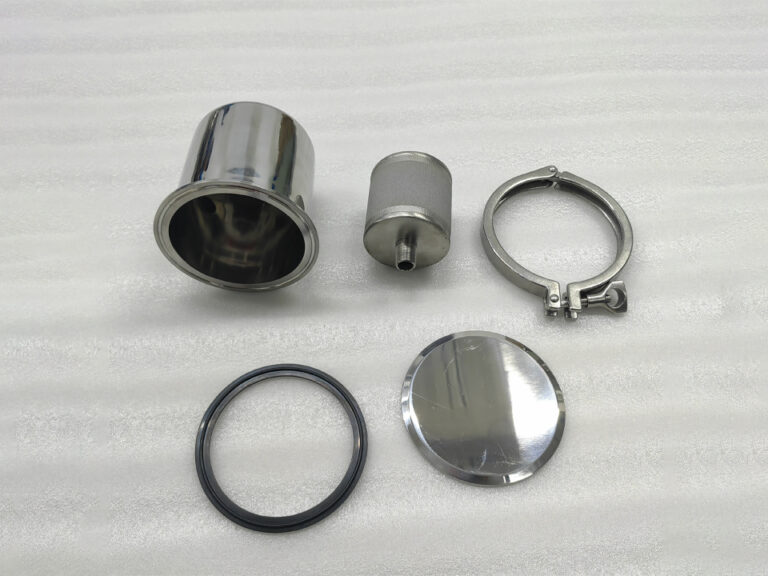
Hardware details matter at the interface. The PA sinterlenmiş gözenekli plastik filtre kartuşu is offered with plastic or stainless steel connectors, so the connector grade becomes a separate specification line. Likewise, if an element uses a 222, 226 or threaded interface, confirm that the housing seat and adapter match both the geometry and the corrosion plan.
How Should You Think About Cost?
Do not compare 304 and 316L on unit price alone. The price gap changes with alloy surcharges, so ask the supplier to quote both grades against the same drawing, wall thickness, finish and testing scope. Then compare against the cost of failure:
Replacement or repair of a vessel during production.
Downtime and requalification after a leak or pitting event.
Product loss or rejected batches from metal contamination.
Added inspection frequency if a lower-grade housing is run near its limit.
Where the customer’s requirement is open, a split approach can be reasonable: 316L for wetted surfaces, and 304 for parts such as support frames in a dry indoor installation. Check that external parts will not see salt air, washdown chemicals or condensation before accepting that approach.
How Do You Verify You Received the Grade You Ordered?
A magnet cannot reliably separate 304 from 316L, and a grade name on a quotation is not proof of composition. Ask for:
A mill test report for the sheet, tube and forged components, with heat numbers traceable to the housing (a 3.1-type certificate is common practice).
Positive material identification on finished housings, which can detect molybdenum.
Weld inspection and pickling or passivation records.
Measured surface roughness where a finish is specified.
Pressure test documentation matched to your design pressure and applicable code.
Alıcılar, fiyat teklifi talep etmeden önce neleri belirtmelidir?
A complete request lets the supplier quote the right grade the first time. Prepare these items:
Fluid and concentrations: chloride level, free chlorine, pH, solids and any process chemicals, including the worst-case excursion.
Cleaning and sterilization: agent, concentration, temperature, frequency and rinse method.
Sıcaklık ve basınç: normal and peak values, and whether cycling occurs.
Görev programı: continuous, batch or intermittent, and whether the vessel stays wet or is drained.
Hygiene requirement: product-contact finish as an Ra value and electropolishing needs.
Cartridge format: element type, length, seat and sealing style, so the housing interior matches.
Belgeler: material certificates, PMI, passivation records, pressure testing and any destination-market requirements.
Installation environment: indoor, coastal, washdown or exposure to de-icing salt.
Is 316L always better than 304 for a filter housing?
No. 316L resists pitting and crevice corrosion better, but 304 is adequate for clean, low-chloride, well-drained service. Choose 316L when chlorides, sanitizers, heat or hygiene requirements create risk, and pay for the upgrade only where it reduces that risk.
How much chloride can 304 and 316L tolerate?
For potable and natural water at pH 6–8.5, UK water-industry guidance cites about 200 mg/L for 304 and 1000 mg/L for 316. A conservative view for weakened conditions is 50 mg/L and 250 mg/L. Process fluids need their own corrosion data.
Does 316L matter for pharmaceutical or food filter housings?
Often, but check the source of the requirement. 316 and 316L are mainly used in ASME BPE-type equipment, while 304 can also be used. Customer specifications frequently require 316L, and surface finish and documentation can be equally important.
Does a PTFE or PE cartridge protect a 304 housing from corrosion?
No. The cartridge material only affects the element. The housing wall, seals and welds still contact the fluid, so the shell grade must be selected for the operating conditions, not for the cartridge.
Can I tell 304 from 316L with a magnet?
No. Both grades are austenitic and can show similar weak magnetism after cold work, so a magnet cannot separate them. Request mill certificates tied to heat numbers and, where the risk justifies it, positive material identification of the finished housing.
What if my chloride level is above the 316L range?
Consider duplex 2205, higher-alloy stainless steel, or a non-metallic housing and element if pressure and temperature permit. The IGN selection table points to 2205 for 1,000–3,600 mg/L chloride, and to 6% Mo grades above that.